Corn Treatment: How to Identify, Relieve, and Prevent Pain
Corn Treatment
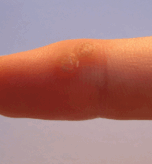
You’ve shaken out your shoe three times today, but that sharp, stinging sensation remains. It feels like a tiny pebble is glued to your toe, making every step a chore. That stabbing pain is the classic hallmark of a corn on foot. If you’re wondering what does a corn look like, picture a small, hardened bump with a dense central core; what does corn look like on your foot or what does a corn look like on toe are common questions with the same answer: a tough plug pressing inward.
Although some people casually call this callus foot disease, podiatrists explain this isn’t a disease, but your body’s defence mechanism reacting to constant mechanical pressure. This daily rubbing triggers hyperkeratosis—simply a medical term for when your skin over-produces cells to build a tough shield. A typical corn appears as a hard, raised bump with an inward-pointing core.
Unlike a broad, flat callus, this concentrated centre stings intensely when pressed. To safely treat a foot corn, you must first stop the underlying friction causing it. If you want to treat a corn on foot the right way, start by identifying the pressure point creating the problem.
Hard Skin vs. Pointed Pain: Spotting the Difference Between Calluses and Corns
Your skin naturally builds a protective shield when shoes constantly rub against it. However, when intense pressure hits one tiny spot, that shield grows inward to form a hard nucleus, or core. Shaped like an upside-down funnel, this core presses directly into your nerves, creating a sharp, stinging pain.
Recognising this pinpoint centre clears up the confusion. A toe corn usually presents as a small, hardened circle. Conversely, broad, flat patches of rough skin that spread outward typically indicate everyday calluses. If you’re dealing with hard skin on feet or a callus on foot, note that corns have that painful, pointed centre while calluses are usually wider and less tender.
Viruses can also cause painful bumps, making the difference between a corn and a plantar wart tricky to spot. Try a simple “pinch test” for clarity at home. If gently squeezing the bump from side to side hurts more than pressing straight down onto it, it is likely a wart.
Pinpointing exactly what is hiding in your shoe is the vital first step toward walking comfortably again. Uncovering that core structure naturally prepares you to identify the three foot corn types and why they develop on your toes.
The Three Foot Corn Types and Why They Choose Your Toes
That stinging core is only half the battle, as these protective shields adapt to their environment. Where your shoe rubs against the bone, combined with how much your feet sweat, completely changes the texture of the bump.
Depending on the exact friction point, you will encounter one of these three foot corn types:
- Hard Corns: Firm, dry bumps on the tops or sides of toes where shoes pinch the hardest.
- Soft Corns: Whitish, rubbery spots hidden between toes where bones press together.
- Seed Corns: Tiny, stiff dots that look like small plugs, typically found on the bottom of the foot.
Trapped moisture explains why some of these spots feel so much different to standard hard skin on feet. When toes are squeezed together in tight trainers, everyday sweat breaks down the tough keratin, turning what would be a hard shield into a tender, mushy soft corn.
Matching your specific pain to one of these categories dictates exactly how to safely treat it. Dismantling that hardened centre usually requires chemical help, bringing us to the “glue melter” approach: using salicylic acid and urea to soften hard skin.
The ‘Glue Melter’ Approach: Using Salicylic Acid and Urea to Soften Hard Skin
Instead of hacking at that painful core, the safest approach involves dissolving the biological “glue” holding those dead cells together. This foot corn treatment uses keratolytics. Applying a 20 to 40 percent concentration of urea cream gently dismantles this hardened structure over a few days.
For targeted treatment, corn medicine for feet relies on a stronger melter to break down the deepest part of the nucleus. Using 40 percent salicylic acid plasters works effectively, but this chemical cannot differentiate between dead build-up and healthy toes. Preventing painful skin damage requires the “doughnut” method—placing an O-shaped felt pad around the bump so the medication only touches the exact centre while shielding the surrounding area. Over-the-counter options often market themselves as “corn for feet” products, sometimes labeled as corn medicine foot. You can also use a corn remover toe pad or cap to isolate the area and keep pressure off while the actives work.
Giving these treatments time to work gradually turns that sharp, inward-pointing cone into a white, crumbly texture. After the chemical agents have successfully melted the structural glue, you can safely move on to using pumice stones and pads for immediate relief. If you’ve been asking how can I get rid of a corn or how can i remove corns without cutting, the answer usually involves patient, careful use of urea or salicylic acid plus pressure relief.
Safe At-Home Smoothing: Using Pumice Stones and Pads for Immediate Relief
Once the hardened skin softens, your goal is stopping the daily friction that built this biological shield. You can achieve this through “pressure offloading”—a simple method of shifting weight away from the sensitive core. Finding the best pads for toe pressure relief means choosing doughnut-shaped cushions that surround the bump instead of pressing into it.
With the pressure safely managed, you can smooth away those dead cells. If you’re wondering how to remove foot callus or how do you remove calluses from feet, proper callus removal prevents accidental injury:
- Soak feet in warm water for 10 minutes.
- Pat the skin completely dry.
- Glide a wet pumice stone in one direction. Avoid “sawing” back and forth, which tears tissue.
- Apply a thick moisturiser.
Gentle, one-way filing ensures you only shed dead layers without irritating the toe. These steps also help heal foot calluses while you continue corn treatment. However, if progress feels slow, you might be tempted to use sharp clippers. That risky impulse leads directly into why attempting at-home bathroom surgery often ends in disaster.
When ‘Bathroom Surgery’ Goes Wrong: Knowing When to Seek Professional Podiatry
Grabbing nail clippers to slice off a stubborn bump is a fast track to infection. Many people also wonder if medicated corn removers are safe. Unfortunately, these acid-soaked pads cannot distinguish between dead cells and healthy skin, frequently causing severe chemical burns instead of true relief.
Watch closely for infection warning signs like sudden warmth, throbbing, or red streaks travelling up your foot. This vigilance is crucial if you experience peripheral neuropathy—nerve damage causing foot numbness. Safe diabetic foot care strictly prohibits home cutting because poor circulation makes healing accidental wounds incredibly difficult.
Instead of risking dangerous bathroom operations, a professional podiatry corn removal procedure involves safe, painless “debridement,” where a doctor gently clears away the thickened shield in a sterile environment. Once that sensitive core is properly removed, you are ready for your walk-pain-free action plan: preventing recurring friction and pressure.
Your Walk-Pain-Free Action Plan: Preventing Recurring Friction and Pressure
You no longer have to suffer through every painful step. If you want to know how to remove calluses on feet permanently, shift from treating symptoms to preventing recurring foot friction and pressure. Start by doing a quick “shoe audit” to toss tight culprits, and build a two-minute daily moisturising habit to keep your skin flexible. This is also how to get rid of calluses on feet while reducing the chance of new corns.
When shopping, always use the “Thumb Rule”—leave a thumb’s width of space at the front of the shoe. Protect your feet using this simple checklist:
- Width: Ensure toes lay completely flat without pinching.
- Depth: Seek roomy toe boxes, especially when selecting cushioned footwear for hammertoes.
- Material: Choose soft, breathable fabrics that naturally stretch with your movement.
Your skin is simply defending itself; if the mechanical pressure stays, the corn will return. By eliminating friction, your skin will naturally return to a smooth texture within a few weeks, leaving that invisible pebble behind for good. In short, if you’re asking how to get rid of corns, how to rid corns on feet, or how to eliminate corns, consistent pressure relief plus gentle keratolytics beats cutting every time—and that’s the essence of effective corn treatment and corn removal.
Thinking about corn removal? Contact Ace Clinic – HSPC Registered podiatrist
Quick Answers to Common Questions
- How can I get rid of a corn? Offload pressure, apply urea or salicylic acid carefully, and consider professional debridement if needed.
- How to get rid of corns? Follow the same steps: reduce friction, use keratolytics, and protect the area with pads.
- How can I remove corns? Combine pressure relief with urea/salicylic acid and gentle filing once softened.
- How to rid corns on feet? Choose roomier footwear, use doughnut pads, and apply targeted corn medicine for feet.
- How to remove calluses on feet permanently? Prevent pressure hotspots, moisturise daily, and maintain regular gentle filing.
- How to remove foot callus? Soak, dry, then file one way with a pumice stone before moisturising.
- How do you remove calluses from feet? Avoid blades; use safe filing after softening the skin.
- What does a corn look like? A small, hard bump with a central core that hurts when pressed.
Q&A
Question: How can I tell if the bump is a corn, a callus, or a wart?
Short answer: A corn is a small, hard bump with a dense central core that hurts sharply when you press straight down on it. A callus is broader and flatter, spreads outward, and is usually less tender. If you suspect a wart, try the pinch test: gently squeeze the bump from side to side—if that hurts more than pressing down, it’s likely a plantar wart.
Question: Why do corns hurt so much compared to calluses?
Short answer: Corns form when intense pressure targets a tiny spot, creating an inward-pointing core shaped like an upside-down funnel. That core presses directly into nerve endings, producing a sharp, stinging pain. Calluses, by contrast, are wider pads of thickened skin that distribute pressure more broadly, so they’re usually less painful.
Question: What are the three types of corns and where do they show up?
Short answer:
- Hard corns: Firm, dry bumps on the tops or sides of toes where shoes pinch.
- Soft corns: Whitish, rubbery spots between toes, softened by trapped moisture and sweat.
- Seed corns: Tiny, stiff plugs that appear on the bottom of the foot.
Question: How do I use urea and salicylic acid safely to treat a corn at home?
Short answer: Start by softening with a 20–40% urea cream for a few days to break down the hardened layers. For the deep core, use 40% salicylic acid plasters, but protect surrounding skin with a “doughnut” felt pad so the acid only touches the center. Offload pressure with toe pads or caps while the actives work. As the core turns white and crumbly, smooth gently with a wet pumice stone in one direction after soaking and drying, then moisturize. Avoid cutting or “bathroom surgery,” which risks injury and infection.
Question: When should I stop self-care and see a podiatrist, and how do I prevent corns from coming back?
Short answer: Seek professional care if you notice signs of infection (sudden warmth, throbbing, red streaks), if you have peripheral neuropathy or diabetes (don’t cut at home), or if progress is slow and you’re tempted to use blades. A podiatrist can perform safe, painless debridement. To prevent recurrence, remove the cause of friction: do a shoe audit, moisturize daily for two minutes, and follow the Thumb Rule (leave a thumb’s width of space at the front). Choose shoes with adequate width, depth (roomy toe boxes), and soft, breathable materials. With consistent pressure relief, skin typically returns to smooth within a few weeks.